
Life and significance
A bishop who joined doctrine with Christian life
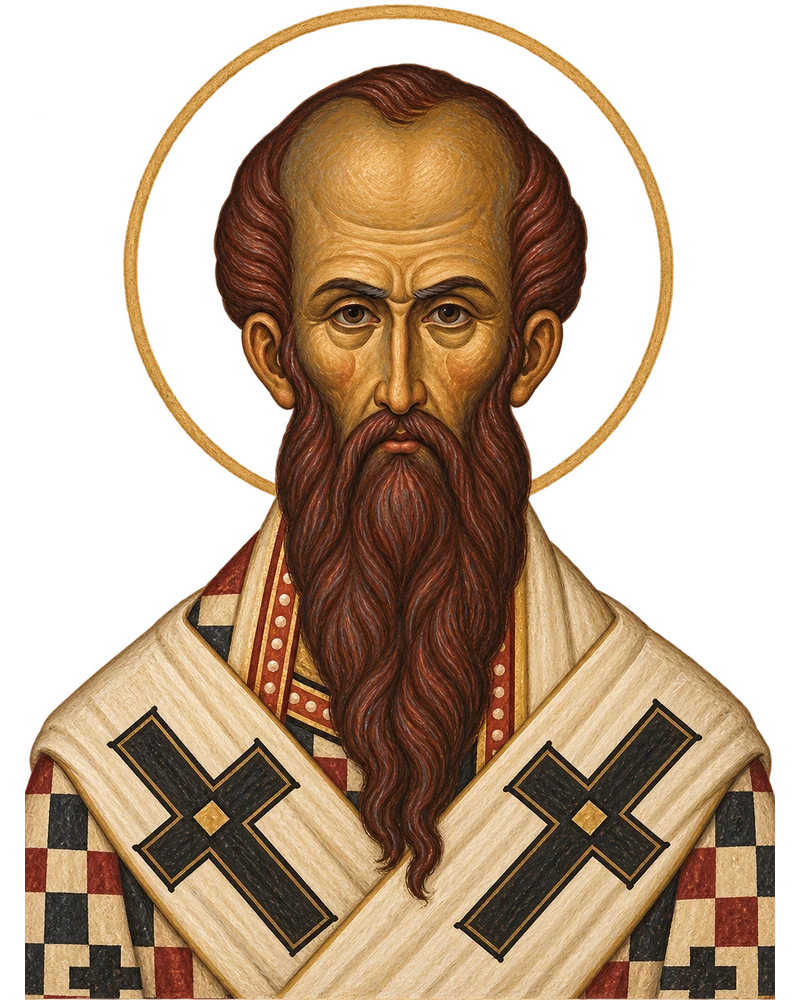
St Basil the Great was born into a devout Christian family in Cappadocia and received an excellent education before turning toward the ascetic life. After visiting monastic communities, he helped form a pattern of common Christian life centered on prayer, Scripture, work, obedience, and care for others. He became Bishop of Caesarea in 370 and served during a period of intense conflict over the Church’s teaching about the Father, Son, and Holy Spirit. Basil defended the faith of Nicaea while working patiently for unity among divided Christians.
Basil’s writings unite careful theology with practical pastoral concern. In On the Holy Spirit he defended the divinity and worship of the Holy Spirit, helping clarify the Church’s Trinitarian language. His ascetic teaching became foundational for Eastern monasticism, and his charitable institutions cared for the poor, sick, and vulnerable. The Orthodox Church honors him as one of the Three Holy Hierarchs and remembers him as a model of learned, courageous, and merciful episcopal service.