About this work
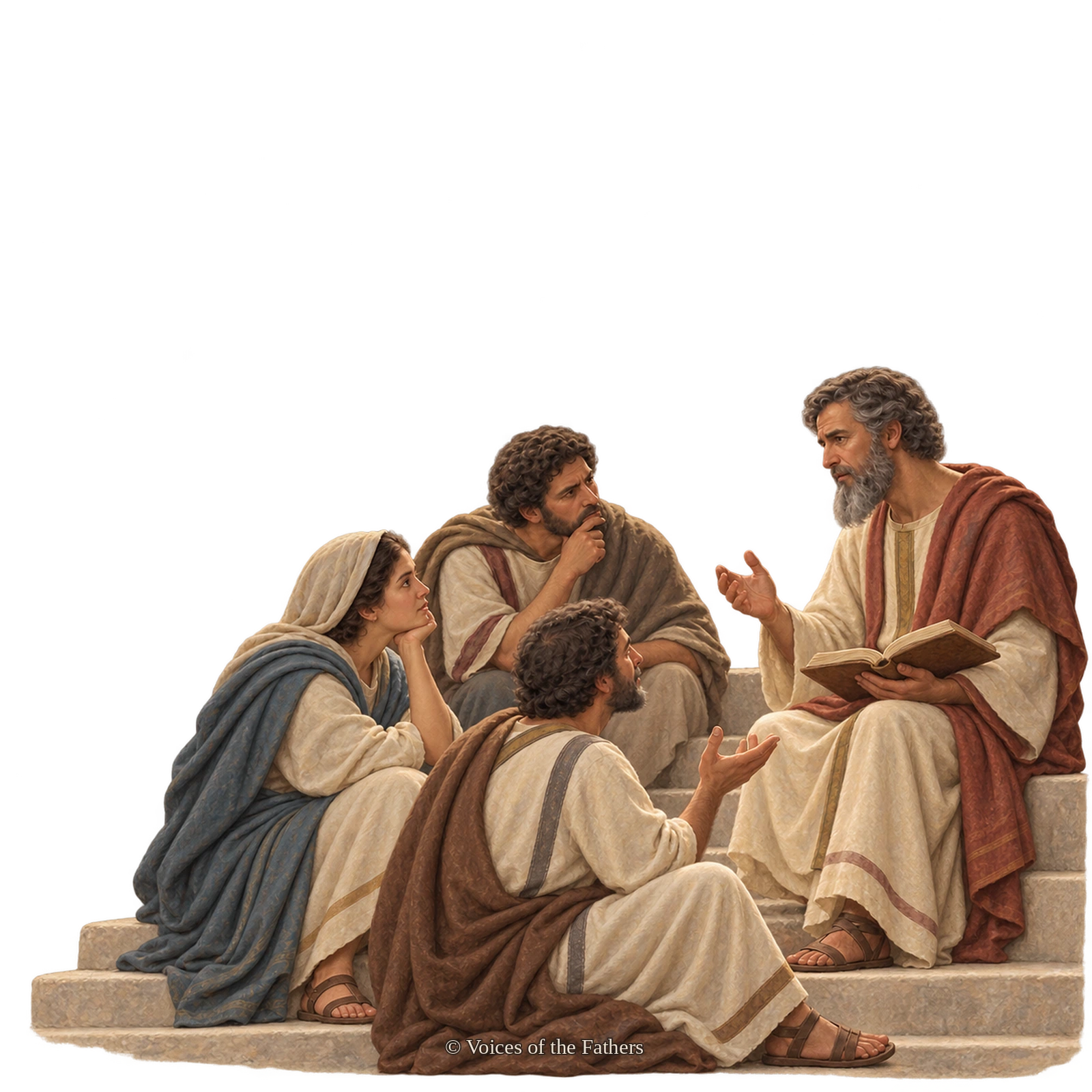
On the Holy Spirit is Saint Basil of Caesarea’s sustained defense of the Holy Spirit’s divine dignity and inseparable communion with the Father and the Son. Beginning from questions about the language Christians use in worship, Basil shows that Scripture, baptism, the Spirit’s works, and the Church’s received practice all point in the same direction. The treatise is especially important in Orthodox tradition because it joins doctrine to prayer: the Spirit is not a distant topic of speculation, but the One who gives life, sanctifies, illumines, and enables the Church to glorify God.
Historical context
Basil wrote On the Holy Spirit during the intense Trinitarian disputes of the 370s, while serving as bishop of Caesarea, and addressed it to Amphilochius of Iconium. Current scholarship generally places its composition between 373 and 375, with the treatise reaching its completed form around 375. The immediate controversy concerned whether the Spirit should be glorified “with” the Father and the Son, but the dispute opened into the larger question of the Spirit’s divine rank. The work belongs to the Church’s clarification of the confession of the Holy Spirit in the years before the Council of Constantinople in 381.
Contents
The work begins with close attention to small words such as “through,” “with,” and “in,” because Basil’s opponents used them to assign different ranks to the Father, Son, and Spirit. He then turns to baptism, Scripture, the Spirit’s names and works, and the inseparability of the Spirit from the Father and the Son in creation, sanctification, and judgment. Later chapters defend glorifying the Spirit, explain the Church’s use of written and unwritten tradition, and gather earlier Christian witnesses for the doxology “with the Spirit.” The final chapter closes with Basil’s vivid picture of the Church amid doctrinal conflict.
Text & source details
Editions
- Edition
- Original Greek
- Reader label
- Ancient Greek
- Publication
- C. F. H. Johnston, ed., The Book of Saint Basil the Great, Bishop of Caesarea in Cappadocia, On the Holy Spirit (Oxford: Clarendon Press, 1892).
- Date
- 1892
- Rights
- Historical 1892 edition; public domain in the United States. Other jurisdictions should be reviewed as appropriate.
- Edition
- Voices of the Fathers Modern English
- Reader label
- Modern English — VOTF
- Translator
- Voices of the Fathers editorial project
- Publication
- Voices of the Fathers
- Date
- 2026
- Rights
- Voices of the Fathers Modern English is licensed under the Creative Commons Attribution-NonCommercial 4.0 International License (CC BY-NC 4.0), to the extent copyright and related rights subsist in the translation and associated editorial material. Commercial reuse requires separate permission from Voices of the Fathers. The underlying ancient text and identified public-domain source editions retain their respective status.
- Edition
- Blomfield Jackson (1895)
- Reader label
- English — Jackson (1895)
- Translator
- Blomfield Jackson
- Publication
- Nicene and Post-Nicene Fathers, Second Series, Volume VIII (Edinburgh: T&T Clark, 1895).
- Date
- 1895
- Rights
- Public domain in the United States; CCEL identifies the historical text as public domain.
Text and edition sources
C. F. H. Johnston, ed., The Book of Saint Basil the Great, Bishop of Caesarea in Cappadocia, On the Holy Spirit (Oxford: Clarendon Press, 1892).
Applies to: Ancient Greek Public domain in the United States. Source websiteBasil of Caesarea, On the Holy Spirit, Voices of the Fathers Modern English, Voices of the Fathers, 2026, CC BY-NC 4.0.
Applies to: Modern English — VOTF CC BY-NC 4.0 applies to the project-created translation/editorial contribution to the extent copyright and related rights subsist. Source websiteOn the Holy Spirit, Voices of the Fathers Modern English, Voices of the Fathers, 2026, CC BY-NC 4.0.
Applies to: Modern English — VOTF Source websiteBlomfield Jackson, trans., “On the Holy Spirit,” in Nicene and Post-Nicene Fathers, Second Series, Volume VIII (Edinburgh: T&T Clark, 1895).
Applies to: English — Jackson (1895) Public domain in the United States; CCEL identifies the text as public domain. Source websiteJ.-P. Migne, ed., Patrologiae Cursus Completus, Series Graeca, vol. 32 (Paris, 1857).
Historical public-domain edition; repository marks the scan as public domain. Source websiteOverview research
John Joseph Whitty, “Reading Basil of Caesarea’s On the Holy Spirit as Apology: Reassessing the Influence of Eustathius of Sebaste on the Treatise,” Vigiliae Christianae 77, no. 4, 353–374; first published online 2022. DOI 10.1163/15700720-bja10056.
Source websiteOrthodox Church in America, “Saint Basil the Great, Archbishop of Caesarea in Cappadocia.”
Source website