
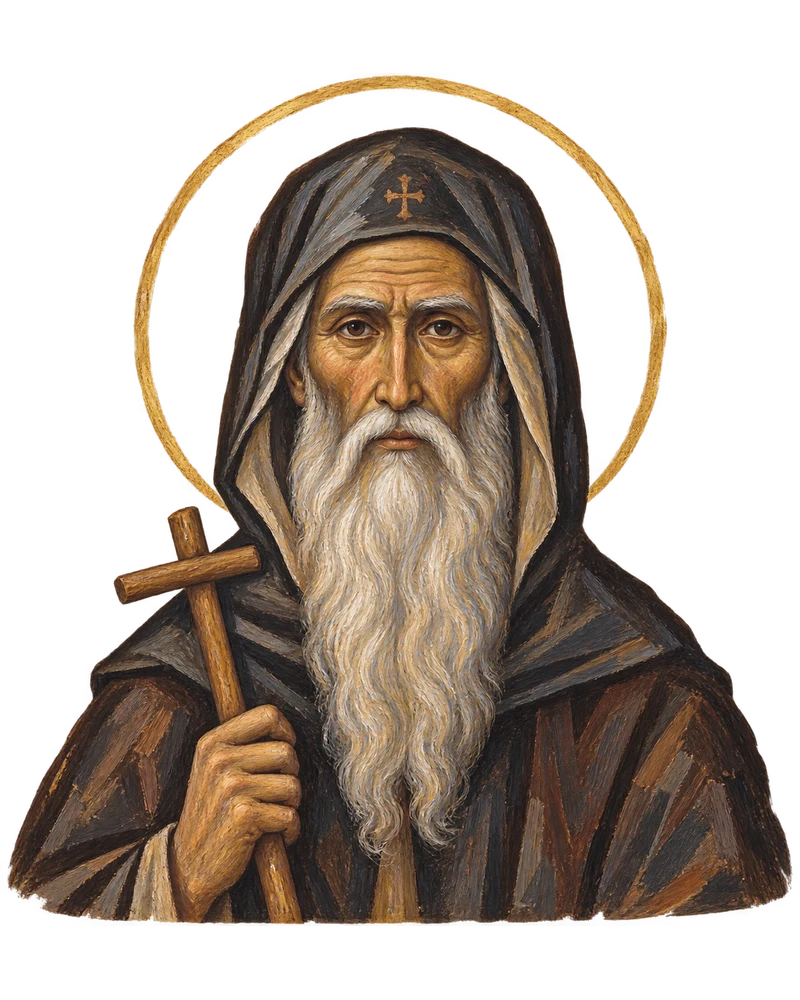
Life and significance
Father of the common monastic life
St Pachomius the Great was born in Upper Egypt around the end of the third century. According to the ancient Lives, his first strong impression of Christianity came when Christians showed kindness to young soldiers who had been conscripted into the army. After leaving military service, he was baptized and later became a monk under the ascetic Palaemon. The Church remembers this period as the beginning of a calling that would shape Christian monastic life for centuries.
Pachomius was called to gather monks into a shared way of life. Instead of living only as separate hermits, his monks lived in organized communities with common prayer, work, meals, discipline, and care for one another. Monasteries were founded at places such as Tabennesi and Pbow, and the movement grew into a large family of communities. This way of life became known as communal, or cenobitic, monasticism.
The Pachomian tradition preserved rules, letters, teachings, and instructions connected with St Pachomius and the communities that followed him. These writings became a major part of the heritage of Egyptian monasticism and later influenced monks far beyond Egypt. Sources differ slightly on the exact year of his repose, but place it in the mid-fourth century. The Coptic Orthodox Church remembers him as the father of the spiritual communal monastic life.